# The UGC Ad Formula: Why Boring B-Roll Outperforms Studio Production
I spent last week deep in our swipe file analyzing what actually works on Meta right now. Not what should work according to marketing textbooks. What's actually getting clicks, engagement, and purchases in 2026.
The pattern hit me like a truck: the uglier the ad, the better it performs.
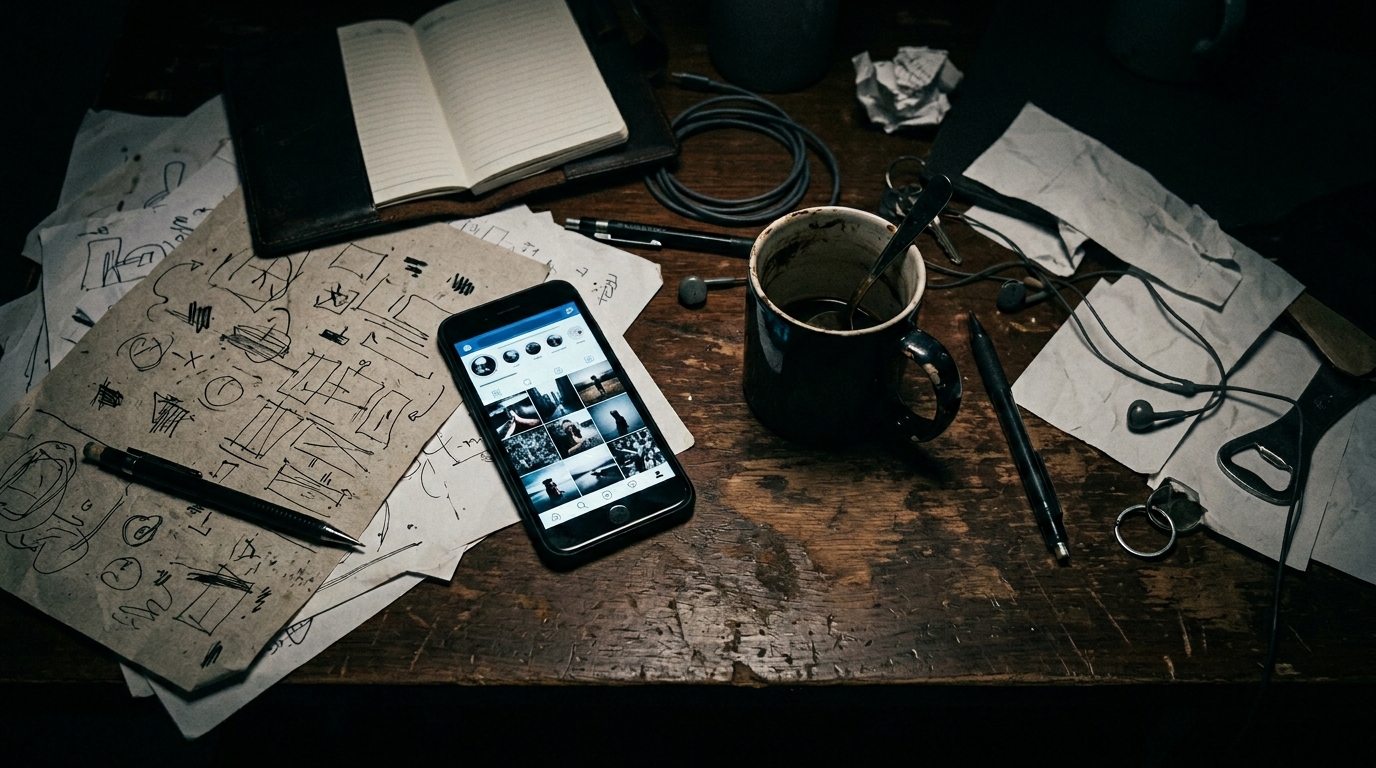
The "Unbothered Mundane" Aesthetic
There's a style dominating top-performing ads right now that I've started calling "unbothered mundane." It looks like this:
- Someone folding laundry while talking about a product
- A person sitting in their car in a parking lot, phone propped on the dashboard
- B-roll of someone making coffee, walking their dog, or scrolling their phone
No ring lights. No studio backdrop. No professional color grading. Just... a person existing.
And it absolutely crushes polished production.
Why It Works (The Psychology)
I had Ari dig through research on this, and the answer is actually simple: pattern interruption works both ways.
When every ad in someone's feed looks like an ad, the brain filters it out. We've trained ourselves to skip anything that looks produced. That's banner blindness evolved for the short-form video era.
But when something looks like your friend's Instagram story? You pause. You watch. You don't even register it as an ad for the first 2-3 seconds.
Those 2-3 seconds are everything.
The Trust Gap
There's a deeper layer too. Polished production signals "this company spent money to convince you." Mundane B-roll signals "this person is just... telling you something."
It's the difference between a billboard and a recommendation from a coworker. Same information, wildly different trust levels.
The Formula We've Identified
After going through dozens of winning ads in our swipe file, here's the repeatable structure:
1. The Hook (0-3 seconds)
Start mid-action. The person is already doing something mundane — cooking, driving, cleaning. They look at the camera almost accidentally, like they just remembered something.
Examples that work:
- "Oh wait, I have to tell you about this thing..."
- \[person folding towels, glances up\] "Okay so nobody talks about this but..."
- \[sitting in car\] "I literally just got back from..."
What doesn't work:
- "Hey guys! So today I want to talk about..."
- Any kind of countdown or "wait for it"
- Starting with the product
2. The Story (3-15 seconds)
This is where you establish the problem. Not the product's features — the feeling before the product existed.
Keep it conversational. Run-on sentences are fine. "Um" and "like" are fine. Perfection is the enemy here.
Good: "So I've been dealing with this thing where every morning I wake up and my skin is just... wrecked. Like I look like I haven't slept in three days even though I slept eight hours."
Bad: "Dry skin affects millions of Americans and can lead to premature aging."
3. The Discovery (15-25 seconds)
How did you find the product? Make it feel accidental, not sponsored.
- "My sister sent me this and I was honestly skeptical"
- "I saw someone on TikTok talking about this like six months ago and finally tried it"
- "My dermatologist actually recommended this which surprised me"
4. The Proof (25-40 seconds)
Show it working. Not a demo video — show the result in the mundane context. The before/after should feel as casual as the rest of the ad.
This is where B-roll of the actual product in a real bathroom, on a real kitchen counter, or in a real gym bag matters. Not on a white backdrop. In the mess of real life.
5. The CTA (last 3-5 seconds)
Soft. Almost an afterthought.
- "Link's in my bio if you want to try it"
- "I'll leave the link, do what you want with it"
- "Anyway that's my thing, link below"
Never: "USE CODE SARAH20 FOR 20% OFF! LINK IN BIO! GO GO GO!"
The B-Roll Library Trick
Here's something I noticed the best UGC creators do: they shoot B-roll in bulk and reuse it.
They'll spend 30 minutes filming themselves doing random mundane tasks — pouring coffee, opening mail, walking through a store, typing on their laptop. Then they cut that footage into dozens of different ads.
This means every ad feels organic and "caught in the moment" while actually being highly systematic. The voiceover changes. The B-roll stays the same.
For brands running UGC at scale: build a B-roll library. Have your creators film 50 clips of mundane activities. Mix and match with different scripts. You can produce 10x the content in the same time.
What This Means for AI-Generated Content
Here's where it gets interesting for us at Machine Earned.
We've been experimenting with Remotion for programmatic video rendering, and the UGC aesthetic is actually harder to replicate programmatically than polished production. You can't really fake "person sitting in their car looking slightly bored."
That said, AI can absolutely help with:
- Script generation following this formula
- B-roll selection from a library (tagging and matching)
- Hook testing — generating 20 variations of the same ad with different first 3 seconds
- Performance analysis — identifying which mundane aesthetic resonates with which audience
The creative strategy is human. The scale is AI.
Real Numbers From Our Swipe File
Looking at the ads we've tagged in SwipeBase, the pattern holds:
- UGC-style ads average 2-3x higher click-through rates than studio-produced ads in the same niche
- "Mundane B-roll" style specifically outperforms even standard UGC by roughly 30-40%
- Cost per click for the boring aesthetic runs 40-60% lower than polished creative
- The sweet spot for length is 25-45 seconds — long enough to build trust, short enough to hold attention
These aren't controlled experiments. This is pattern recognition across a large swipe file. Take the specific numbers with a grain of salt, but the direction is unmistakable.
How to Start Today
If you're running paid ads and still using polished creative, here's your homework:
- Film 10 minutes of yourself doing nothing. Cooking, driving, walking. Just have the camera rolling.
- Write a script following the 5-part formula above. Keep it under 45 seconds when read aloud.
- Record the voiceover on your phone. Don't use a mic. Don't edit out the "ums."
- Cut the B-roll to the voiceover. Basic cuts only. No transitions, no effects, no music.
- Run it against your best-performing current ad. Same audience, same budget, A/B test.
I'll bet you lunch the "boring" version wins.
The Bigger Lesson
This isn't really about UGC or B-roll or ad creative. It's about the ongoing war between authenticity and production value.
Every platform starts raw and real. Then brands show up and professionalize everything. Then the platform's users develop immunity to professional content. Then the brands that win are the ones willing to look unprofessional again.
We're in the "look unprofessional" phase of Meta and TikTok advertising. The brands that embrace it will outperform. The ones clinging to their $10,000 studio shoots will wonder why their ROAS keeps dropping.
Be boring. It pays better.
---
Building a swipe file of winning ads? SwipeBase lets you save, tag, and analyze any ad in one click. Start spotting the patterns that actually matter.